If your kids light up the second you say “Let’s go on a nature walk,” but glaze over the moment it turns into a worksheet… Explore the Woodlands is for you. This woodlands unit study is a hands-on elementary homeschool unit that helps kids understand forests the way they actually experience them: through animals, tracks, leaves, habitats, and real-life discovery. It’s a nature-themed unit study with 23 activities (materials included) that combines science, art, writing, movement, and creative play to teach woodland habitats, forest animals, and plants in a way that sticks.
This unit is designed for elementary learners ages 7–12, which makes it a great fit for many grades 2–5 families, especially if you like learning together and adjusting up or down as needed. The learning goals are solid and practical: kids explore ecosystems and food chains, investigate animal adaptations, practice scientific observation, and build nature journaling and writing skills through guided prompts. Instead of “read it and forget it,” your child will classify, compare, build, create, and record what they notice, like a real young naturalist.
What makes this forest unit study stand out is how many different ways it lets kids interact with the topic. It’s not just “learn about woodland animals.” It’s “prove it, model it, and show what you learned.” One of the biggest highlights is the Owl Pellet Mystery with 10 discovery activities, where kids dissect real owl pellets and practice observation, classification, and data recording while learning about the food chain. This is the kind of science kids remember forever (and yes, it’s a little gross—in the best possible way). From there, kids move into animal tracks exploration, creating and identifying tracks to understand how forest creatures move and survive.
Hands-on building and art are woven throughout, so learning never feels flat. Kids assemble and decorate 3D woodland animal models (two sets), connecting physical features to survival and animal adaptations. They sculpt clay forest animals while noticing details like fur, feathers, and body structure, then use leaf imprints and watercolor leaves to explore tree identification through leaf shapes. And because ecosystems are easier to understand when you can “see” them, kids build a woodland diorama that shows how a woodland ecosystem fits together.
This unit also includes outdoor learning in a way that’s actually doable. You get two nature scavenger hunt activities that encourage kids to head outside, search for woodland clues, and practice observation and nature journaling skills—perfect for families who want a nature study that gets kids moving and noticing the world around them. For days when the weather isn’t cooperating (or you just need “inside learning” to happen), there’s creative sensory play with play dough for hands-on engagement, plus creative movement with forest animal–inspired gross motor movements like stretch like a deer, balance like a squirrel, relax like a bear!
The reading lineup supports the theme in a way that feels purposeful, not random. The unit includes The Wild Robot by Peter Brown for rich discussions about adaptation and ecosystems, along with nonfiction and story-based reads that connect to the activities: Owls by Gail Gibbons (a strong companion to the owl pellet work), A Raccoon at the White House by Rachel Dougherty (animal behavior and humans), Hibernation by Tori Kosara (how animals survive winter through hibernation/migration/food storage), and I Survived the Attack of the Grizzlies: 1967 by Lauren Tarshis for an exciting tie-in to bear behavior and forest safety. This mix gives you multiple entry points: science readers, story lovers, and kids who just want the “wow” factor all have something to connect with.
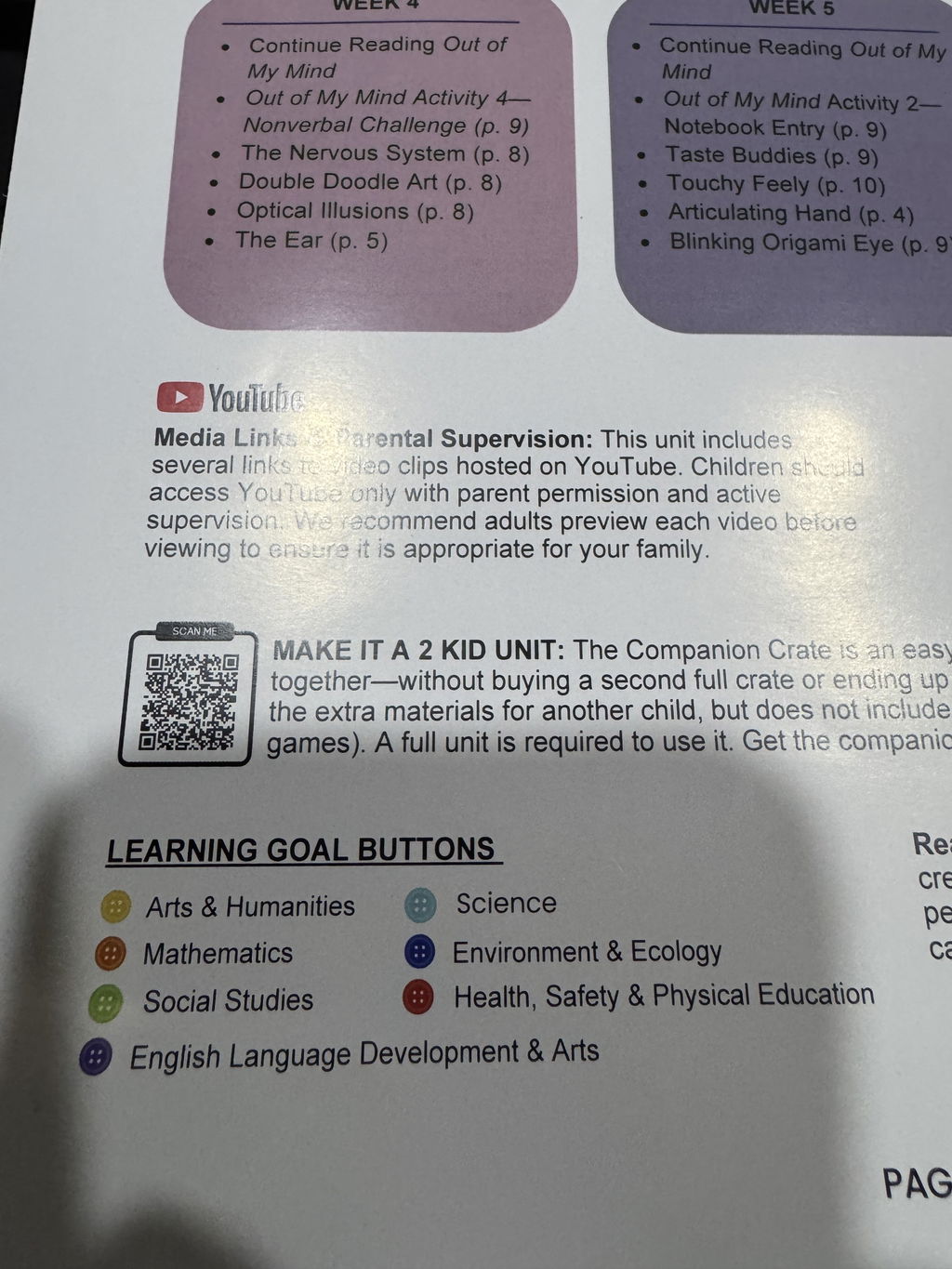
For timing, we provide a free 6-week plan that families can follow if they want an easy, week-by-week rhythm. But this unit is also built for real homeschool life, which means you can absolutely complete it in a shorter burst (hello, kids who want to do all the things right now) or stretch it longer if you want a gentler pace, you’re homeschooling multiple ages, or you prefer to layer nature study into your year. The activities don’t depend on a strict calendar—you can pause for weather, appointments, or “we need a calm week,” then jump back in without losing the thread of the learning.
If you’d like a real-life look at how it can flow, there’s also a companion blog post that walks through how we used the 6-week plan, shows some of the activities in action, and shares homeschool tips and tricks that work in a real home setting (with real interruptions and real-life attention spans). It’s especially helpful if you want to see what a “week” can look like and how families make this kind of nature-based unit feel simple instead of overwhelming.
Additional Resource: Want to see this unit study in action? See Our Blog Post Here
Additional Information: Items may vary based on availability. Crates contain products not manufactured by the seller and may include small parts. Not suitable for children under 3 years. Contents are not for consumption.