









Very cute kit!
We loved the content in this box very engaging
We havent delved in the set yet, but I browsed through the box a little and everything looks so great! Well thought out, themed, top quality stuff as usual!
Weather is one of those preschool topics that practically teaches itself—because your kid is already obsessed. “Why is it windy?” “Where do clouds go?” “How do rainbows happen?” (And, of course, “Can I wear my rain boots even though it’s sunny?”) Explore Weather is a preschool weather unit study designed to grab that everyday curiosity and turn it into real learning through hands-on, screen-free activities. This open-and-go crate is made for Preschool through Grade 1 and includes 20 weather activities with all materials included, plus a boxed set of 6 nonfiction weather books and a full-color activity guide with easy directions.
This unit is intentionally built as a hands-on homeschool science experience for little learners. Instead of worksheets, kids learn by mixing, painting, building, observing, and moving. The themes cover big weather ideas in a preschool-friendly way—rainbows and color, sunshine and snow, rain and wind, and clouds and the water cycle—so children build vocabulary and understanding while doing activities that feel like play. If you’ve been searching “weather activities for preschool” and ending up with a million tabs, this is the opposite of that. It’s all in one place, already organized, already supplied.
Families receive a free 4-week plan to make pacing simple. Each week has a theme and a set of activities that fit naturally together, so you can follow a clear rhythm without reinventing your schedule. But the plan is a guide, not a rule. This preschool weather unit can be completed faster if your child wants to do activities every day or stretched longer if your family prefers a gentle pace or wants to loop weather learning through an entire season. Many families like doing one main activity a few days a week, then repeating favorites (because preschoolers love repetition when they’re in their “I can do it again!” era). The unit is flexible enough to support that, and the learning still builds because the activities connect back to the same weather concepts.
The best way to understand how this looks in real life is the companion blog post. It walks through how the 4-week plan was used, shows several activities in action, and includes homeschooling tips and tricks that work in a real home setting (the kind where someone needs a snack halfway through the experiment and the dog tries to steal the cotton balls). If you like seeing an example schedule, how long activities take, and what a “normal” week can look like, that post is extremely helpful.
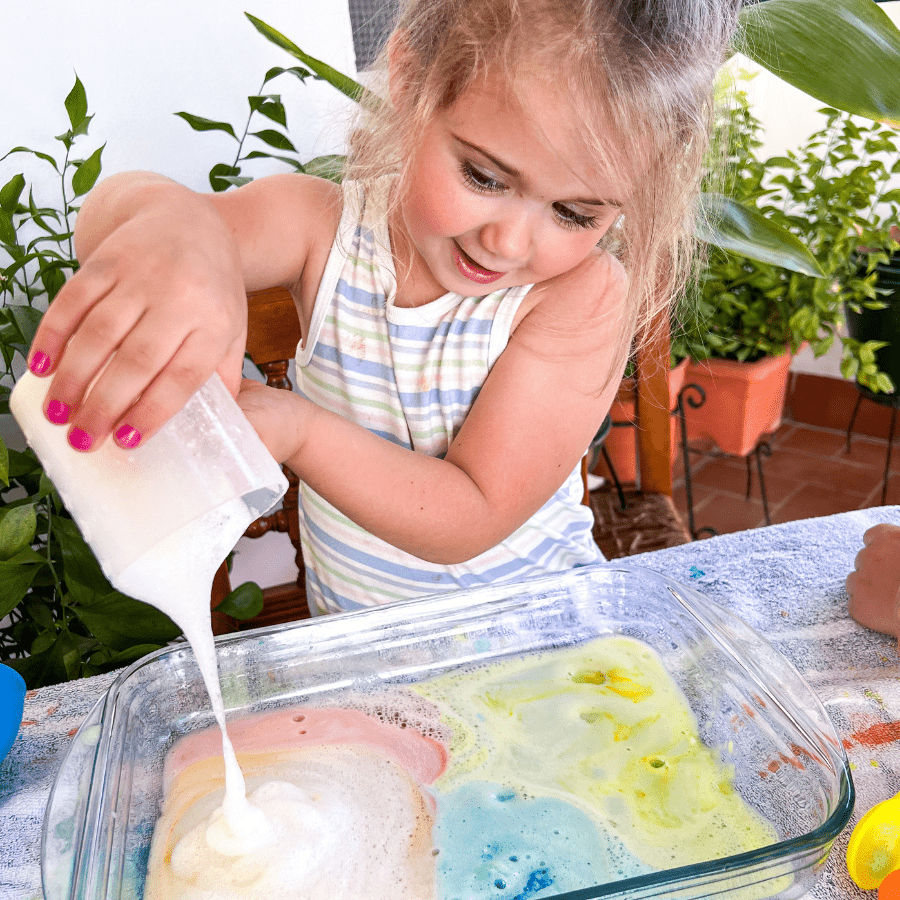
Week 1 leans into rainbows and color—because little kids are basically born ready for color mixing. The unit includes playful, hands-on ways to explore how colors blend, like a walking rainbow experiment and other rainbow-themed science and art that make cause-and-effect visible. It’s the kind of learning where your child sees something happen, reacts like it’s magic, and then wants to talk about why it happened (which is exactly what early science should feel like).
Week 2 shifts into sunshine and snowflakes. Instead of talking about “the sun” as a vague concept, kids get to observe it with activities like tracking shadows outdoors using a human sundial. Then the unit brings in winter weather in a way that still works even if you live somewhere that barely gets snow. A puffy paint snowman and snowflake-inspired art techniques keep the week hands-on and creative while building fine-motor skills and early art confidence.
Week 3 focuses on rain and wind—two things kids can feel immediately. Activities like a rain cloud painting use gravity and watercolor to show how water moves, while the famous “windy day hair” art uses straw blowing to create motion-based painting (which is basically fine-motor + breath control disguised as hilarious fun). This is also where the unit shines for active learners: weather isn’t only something you read about. It’s something you experience, act out, and notice in the world around you.
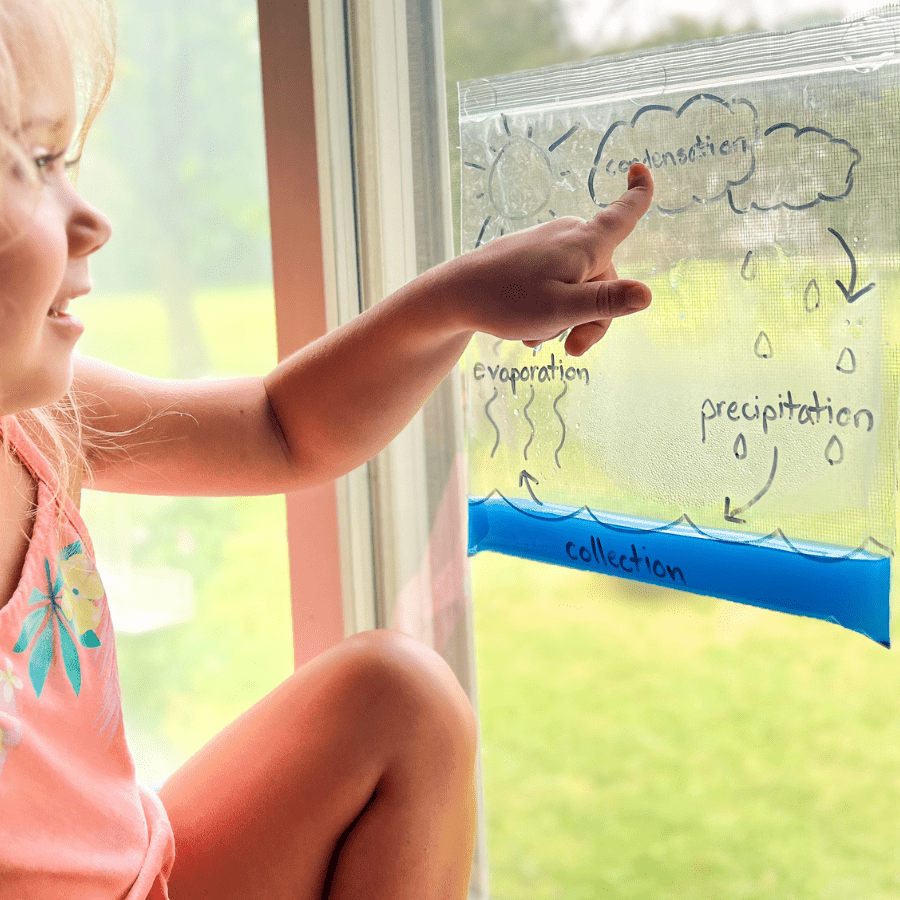
Week 4 brings in clouds and the water cycle in a way preschoolers can understand. Cloud activities use simple materials like cotton balls to explore different cloud types, and a water cycle bag experiment helps kids watch evaporation and condensation happen over time—without a complicated setup. That kind of “wait, we can see it?” learning is powerful at this age. It builds early science thinking skills and vocabulary in a way that sticks because it’s connected to something they see outside their window.
Another reason this unit works so well for preschool through first grade is that it intentionally strengthens multiple early learning areas at once. Weather is a science topic, but it naturally supports early literacy (new vocabulary, weather words, describing observations), early math (sorting, comparing, pattern and sequence), and fine-motor development (painting, tracing, squeezing droppers, using tools). The crate format also makes it easy to keep learning screen-free. Everything is hands-on, and the books do the heavy lifting for content, which is exactly what most families want for early childhood learning at home.
Additional Resource: Want to see this unit study in action? See Our Blog Post Here
Additional Information: Items may vary due to current availability. This crate contains products not manufactured by the seller. Please be advised that crates may contain small parts that may not be suitable for children under 3 years. Do not consume crate contents.
The best educational activity kits for kids are hands-on, engaging, and provide a mix of learning and fun. They should include high-quality materials, clear instructions, and opportunities for creativity and critical thinking. Some of the best options include:
Knowledge Crates stand out as one of the best educational activity kits because they combine all of these elements into themed, hands-on learning experiences. Each crate is thoughtfully curated with books, a variety of projects, and all the materials needed—making it a stress-free way for parents to provide enriching activities at home.
Homeschooling can be overwhelming, especially when planning lessons and gathering materials for activities. Knowledge Crates simplify the process by delivering pre-planned, hands-on learning experiences straight to your door. Here's how they make homeschooling easy:
With Knowledge Crates, homeschooling feels less like a chore and more like an adventure! Whether you’re supplementing a curriculum or looking for engaging activities, these kits make learning at home easy, fun, and stress-free.